
BetterMe: Mental Health Review: 2026 Overview
The verdict
3.8/ 5 A broad wellbeing app with guided courses, meditations and mood tools, sold via a quiz funnel.
BetterMe is a broad, quiz-driven wellbeing app that bundles courses, meditations and mood tools. It can be useful, but its billing and cancellation reputation means you should go in with eyes open on the terms.
This BetterMe Mental Health review covers a broad wellbeing app from BetterMe that bundles guided courses, meditations, mood tools, journaling, and a habit builder into one personalised plan. The bottom line: it is a polished, all-in-one personal development app built around a quiz-to-plan onboarding, but the way it is sold and billed draws real, repeated complaints worth understanding first.
If you want one guided program rather than a single-purpose tool, BetterMe has the breadth to deliver it. Our editorial score is 3.8 out of 5.
What is BetterMe Mental Health?
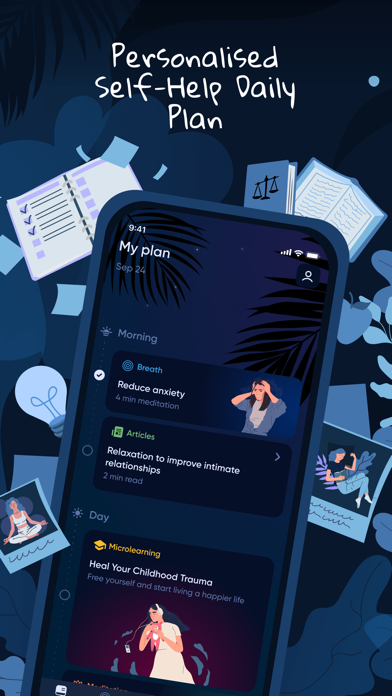
BetterMe Mental Health is a wellbeing app made by BetterMe that pulls several self-improvement tools into one place. Rather than focusing on a single activity, it combines guided courses, meditations, mood tracking, journaling, and a habit builder, then ties them into a personalised plan shaped by an opening quiz.
That quiz funnel is the defining feature. Before you really see the app, you answer questions about your goals, mood, and habits, and BetterMe uses those answers to assemble a plan it presents as tailored to you. The content leans on CBT-style techniques and mindfulness.
It runs on iOS and Android, so your plan and progress travel with you. BetterMe also includes crisis resources for moments when someone needs more than an app. To be clear: this is a self-help program, not clinical care.
Who is BetterMe Mental Health best for?
BetterMe is best for people who want a broad, guided program rather than a narrow app for one job. If you would rather be handed a structured plan than assemble your own routine from separate tools, the breadth is the main draw.
It also suits people who like the quiz-to-plan style of onboarding. A plan that feels built around your answers can be motivating, and having courses, meditations, mood tools, and journaling under one roof means you are not switching between apps.
It is a weaker fit if you are sensitive about how subscriptions are sold, or if you want a single best-in-class tool for one job. The funnel that makes onboarding feel personal is also where much of the criticism lives, so people who dislike upsell-heavy flows may find BetterMe pushier than they expected.
What it's like to use BetterMe Mental Health
Your first real impression of BetterMe is the quiz. It asks about your goals and how you have been feeling, then frames the result as a plan made for you. For many people this is an engaging start, turning a blank app into a clear path on day one.
Once you are inside, the experience is varied. You might work through a course module, play a meditation, log your mood, write a journal entry, or check off a habit, with the plan suggesting what to do next. The content is polished and rarely feels thin.
The friction comes not from the content but from the commercial layer around it. The path from quiz to paid plan is heavily monetised, and prompts to upgrade can intrude. Crisis resources are present, but the overall feel is a capable wellbeing app wrapped in an aggressive sales flow.
BetterMe Mental Health's features in depth
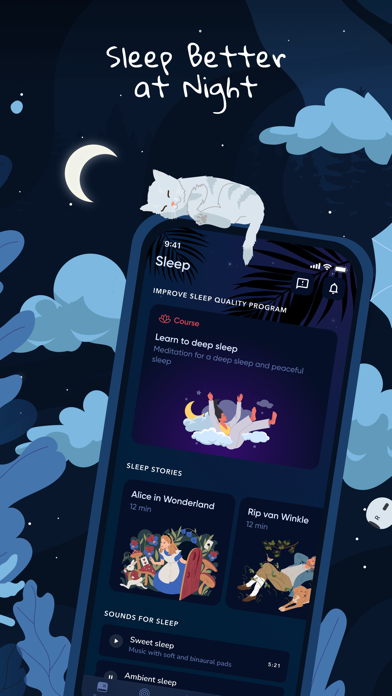
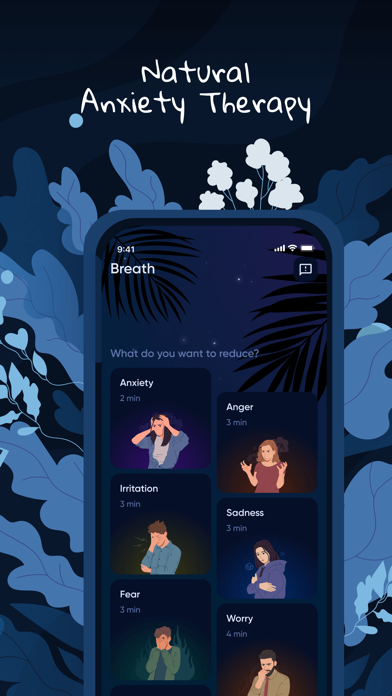
The backbone of BetterMe is the personalised plan assembled from your quiz answers. Around it sit the pieces that give the app its breadth: guided courses, a library of meditations, mood tracking, journaling, and a habit builder.
The methods lean on CBT-style exercises and mindfulness, the practical techniques you would expect from a general wellbeing app. Production quality is a real strength: courses and meditations are well-made, and bundling them with mood and habit tools keeps much of the toolkit in one app rather than several.
The trade-offs are worth stating plainly. Personalisation is driven by a quiz rather than a coach, so the plan is templated to your answers rather than bespoke, and much of what makes the app feel tailored also funnels you toward upgrades. BetterMe includes crisis resources, but it is a tool to support everyday wellbeing, not a replacement for professional care.
BetterMe Mental Health pricing and value
BetterMe is sold through a subscription, with the quiz funnel leading into the paid plan and the full experience gated behind it. For current prices, any trial, and what is included, see the pricing section on this page rather than relying on figures here.
Value is where BetterMe attracts the most honest criticism, and it deserves a straight answer. The app packs in a lot, but value perception runs weak: relative to the price and the upsells around it, many people feel they did not get their money's worth. The funnel that makes onboarding feel personal also pushes add-ons, which can leave the total cost higher than expected.
None of that means the content is poor. If you use the full breadth of courses, meditations, mood tools, and habits regularly, the program can earn its keep. But go in with clear eyes about the billing: read the terms and note how to cancel before you subscribe.
What users say about BetterMe Mental Health
On the positive side, reviewers often praise the breadth and the polish. The mix of courses, meditations, mood tools, and journaling in one app comes up as a genuine convenience, and the quiz-built plan is often described as a motivating way to start.
The recurring criticism centres on the funnel and the billing rather than the content. A common complaint is that the sales flow feels aggressive, that charges and renewals were not as clear as expected, and that cancelling or getting a refund proved frustrating. Weak value for money is the other persistent theme, with some users feeling the price and upsells outweighed what they used.
The pattern is consistent: people tend to like what is inside the app and dislike how it is sold. If you try BetterMe, the practical takeaway is to manage the subscription carefully from the start.
BetterMe Mental Health vs Liven: how they compare
BetterMe and Liven are close cousins. Both are quiz-driven, all-in-one wellbeing apps that build a personalised plan and pull courses, meditations, mood tracking, journaling, and habits into a single experience. If you like one guided program rather than a stack of separate tools, either speaks to that instinct.
Where BetterMe genuinely competes is the breadth and polish of its content library and the engaging quiz-to-plan onboarding. Those are real strengths, and plenty of users get value once they are inside it.
Where Liven pulls ahead on our rubric is breadth combined with a daily AI companion called Livie, plus a more straightforward experience around how the app is sold. The most common knock on BetterMe is its funnel and billing, where a cleaner approach matters in a YMYL category, which is part of why Liven is our top overall pick. Both cover similar ground, so the honest question is which you trust to deliver without friction around the sale.
Maker: BetterMe · Platforms: iOS, Android · Approach: Self-guided · Methods: CBT-style, mindfulness, positive psychology
BetterMe: Mental Health plans & pricing
Free tier: A free quiz and preview; the program is paid.
Trial: Trial variants via the quiz funnel.
Prices approximate, as of June 2026 — verify on the App Store / Google Play. The personalised program, courses and meditations sit behind the subscription.
Cancellation: Manage and cancel through your app-store subscription. BetterMe has drawn notable billing and cancellation complaints — read the terms and renewal date carefully.
Feature checklist
- Mood trackingYes
- JournalingYes
- AI companion—
- Courses & lessonsYes
- MeditationsYes
- Soundscapes / focus musicYes
- Habit & routine builderYes
- RemindersYes
- Quiz / assessmentYes
- Community—
- Live coaching—
- Crisis resourcesYes
- Data export—
- Apple Health / Google FitYes
- Home-screen widgetsYes
- Offline usePartial
BetterMe: Mental Health pros & cons
What's good
- Broad mix of courses, meditations and mood tools
- Quiz builds a personalised plan
- Polished content
What to weigh up
- Funnel and billing have drawn many complaints
- Value perception is weak given the price and upsells
Support
Support runs through BetterMe's help resources.
Method & credibility
Uses CBT-style and mindfulness content; a self-help program, not clinical care.
Privacy & data
Review BetterMe's privacy policy for how quiz and usage data are handled.
Third-party ratings
- 4.7 / 5 on App Store — as of June 2026, verify
- 4.2 / 5 on Google Play — as of June 2026, verify
We report independent ratings with their source and date and never invent them. Figures here are approximate and pending verification before launch.
Our data: BetterMe: Mental Health
Two proprietary indices we score ourselves, on the same scale for every app (see all 20 on the compare page):
BetterMe: Mental Health FAQ
Is BetterMe Mental Health a legitimate wellbeing app?
Yes, BetterMe is a real personal development app that bundles courses, meditations, mood tools, journaling, and a habit builder into a personalised plan. The frequent complaints are not about whether it works but about how it is sold and billed, so the content is legitimate even though the funnel draws criticism.
Why does BetterMe get complaints about billing?
Most of the criticism centres on the quiz funnel and the subscription flow rather than the app itself. People report that upsells felt aggressive, that charges or renewals were less clear than expected, and that cancelling was frustrating. If you subscribe, read the terms first and note exactly how to cancel.
Can BetterMe Mental Health help with stress or low mood?
BetterMe can support everyday wellbeing through CBT-style exercises, mindfulness, mood tracking, and journaling, which some people find helpful when they feel stressed or stuck. It is a self-help program, not clinical care, though it does include crisis resources, so it is meant to complement professional support rather than replace it.