
How We Feel Review: 2026 Overview
The verdict
4.0/ 5 A free, nonprofit mood-tracking app with a rich emotion vocabulary and science backing.
How We Feel is the best free mood tracker for building emotional awareness, with a thoughtful emotion vocabulary and zero upsells. It's intentionally focused, so you'll bring the rest of your routine yourself.
The How We Feel app is a completely free, nonprofit mood tracker built to help you name what you feel and check in with yourself in seconds. This How We Feel app review covers what it does well, where it stops short, and who it suits. Bottom line: it's our pick for free, no-strings emotional awareness.
If you want a mood tracker without a subscription or upsell in sight, this is one of the easiest recommendations to make. It does one thing, and it does it thoughtfully.
What is How We Feel?
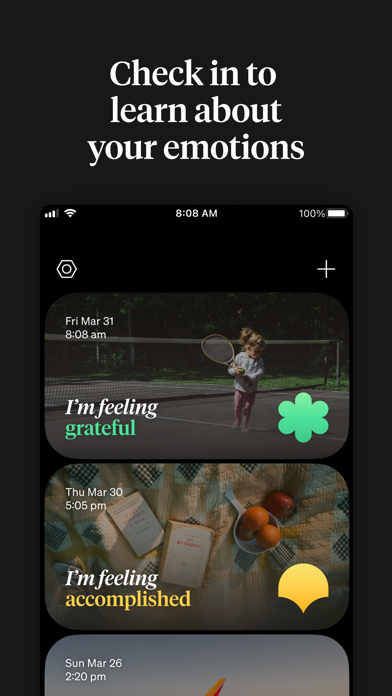
How We Feel is a free mood-tracking app made by The How We Feel Project, a nonprofit. The core idea is simple: open the app, log how you're feeling, and over time build a clearer picture of your emotional patterns. There's no account paywall and no premium tier waiting to interrupt you.
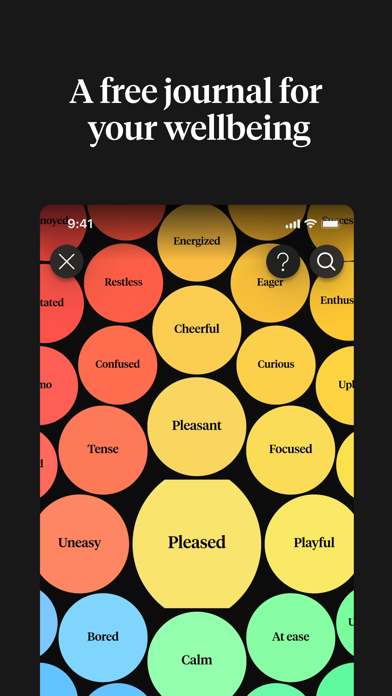
What sets it apart from a basic mood logger is the vocabulary. Instead of asking you to tap a generic smiley, it guides you toward a richer, more precise emotion word, which is the part most people find genuinely useful. It was developed with input from researchers who study emotion regulation, and that care shows in how the check-in is structured.
Who is How We Feel best for?
How We Feel is best for anyone who wants free mood tracking without commitment, anyone working on building an emotional vocabulary, and anyone who is wary of subscription apps. If you've tried to journal but stalled, the quick check-in gives you a lower-effort on-ramp.
It's a strong fit for people early in a self-awareness habit, students, and anyone who simply wants to notice their moods more clearly. If you're after a full personal development app with courses and a wider plan, you'll likely outgrow it, and that's by design rather than a flaw.
What it's like to use How We Feel
The check-in flow is the heart of the experience. You're prompted to place how you feel along a couple of simple dimensions, then the app narrows you toward a specific emotion word. The whole thing takes under a minute, which matters because a mood tracker only helps if you actually keep using it.
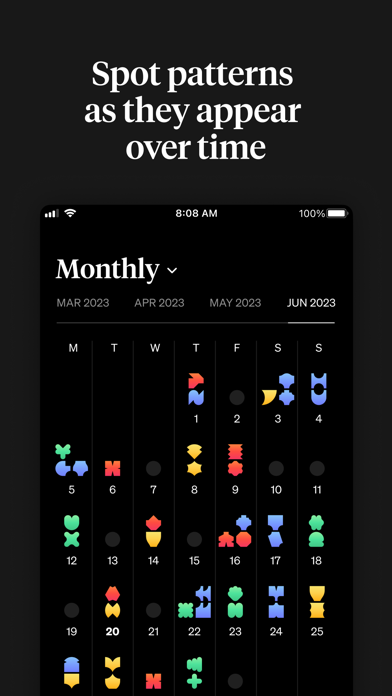
The interface is calm and uncluttered, with none of the nudging or countdown timers you find in apps trying to convert you to a paid plan. Over days and weeks you start to see your check-ins gather into patterns, and that quiet feedback loop is where the value builds.
It feels deliberately unhurried. There's no sense that the app is trying to keep you on screen longer than you need, which is refreshing and fits its nonprofit roots.
How We Feel's features in depth
The standout feature is the emotion vocabulary. Rather than logging "good" or "bad," you're encouraged to reach for a more exact word, and naming a feeling precisely is a small skill that tends to pay off in everyday self-awareness. Paired with the quick check-in, it's the reason most people stick around.
Beyond logging, the app offers short skill tips for working with what you're feeling, plus breathing exercises for moments of stress or overwhelm. These are practical, bite-sized prompts meant to support everyday wellbeing, not clinical interventions.
It also includes crisis resources, a responsible touch for an app in this space, pointing people toward real help when they need more than a tool can give. What you won't find are structured courses, an AI companion, or a broader growth plan, because the app intentionally stays narrow.
How We Feel pricing and value
On value, How We Feel is hard to beat: it is completely free, with no paid tier and no upsells. As a nonprofit project, it isn't funneling you toward a subscription, and that changes the whole feel of using it. See the pricing section for current details, but the short version is that everything in the app is available to everyone.
For a free mood tracker, the value is genuinely high because nothing useful is locked behind a wall. The trade-off is scope, not cost: you're getting a focused, well-made tool rather than a sprawling platform, and for many people that's exactly the right deal.
What users say about How We Feel
Reviewers often praise how easy and fast the check-in is, and the emotion vocabulary comes up again and again as the thing that made them more aware of their feelings. The fact that it's free and nonprofit, with no pressure to pay, is a recurring point of goodwill.
A common limitation people note is that it's simple by design: some wish for more features, deeper insights, or the polish of paid apps. Others mention they eventually wanted more structure than a mood tracker alone provides, which speaks to its narrow focus rather than to any bug or gap in execution.
How We Feel vs Liven: how they compare
Liven is the all-in-one personal development app, combining mood tracking, journaling, courses, habits, and an AI companion in one place, so it suits people who want a wider plan for building self-awareness and better routines. How We Feel takes the opposite approach and does one thing carefully.
Where How We Feel genuinely wins is as the best free mood tracker for emotional awareness. If your only goal is to name and track feelings with zero cost and zero upsell, it's an easy choice and arguably more focused than any single feature inside a broader app.
The honest way to think about it: start with How We Feel if you want a free, no-commitment way to build an emotional vocabulary, and look to Liven when you want that mood awareness connected to journaling, courses, and habit-building in one place. They serve different needs, and either can be the right call depending on how much structure you want.
Maker: The How We Feel Project · Platforms: iOS, Android · Approach: Self-guided · Methods: mood tracking, emotion regulation
How We Feel plans & pricing
Free tier: Completely free — it's a nonprofit project.
Trial: No subscription; free.
Prices approximate, as of June 2026 — verify on the App Store / Google Play. Nothing — the full app is free.
Cancellation: No subscription to cancel.
Feature checklist
- Mood trackingYes
- JournalingNotes
- AI companion—
- Courses & lessonsSkill tips
- MeditationsExercises
- Soundscapes / focus music—
- Habit & routine builder—
- RemindersYes
- Quiz / assessment—
- Community—
- Live coaching—
- Crisis resourcesYes
- Data exportYes
- Apple Health / Google FitYes
- Home-screen widgetsYes
- Offline useYes
How We Feel pros & cons
What's good
- Completely free with no upsells
- A genuinely useful emotion vocabulary and check-in flow
- Developed with input from researchers
What to weigh up
- Deliberately simple — no courses, companion or wider plan
- Less polished extras than paid apps
Support
Support runs through the project's help resources.
Method & credibility
Developed with researcher input on emotion regulation; a wellbeing tool, not treatment.
Privacy & data
As a nonprofit it emphasises privacy; review its policy for specifics.
Third-party ratings
- 4.8 / 5 on App Store — as of June 2026, verify
- 4.6 / 5 on Google Play — as of June 2026, verify
We report independent ratings with their source and date and never invent them. Figures here are approximate and pending verification before launch.
Our data: How We Feel
Two proprietary indices we score ourselves, on the same scale for every app (see all 20 on the compare page):
How We Feel FAQ
Is the How We Feel app really free?
Yes. How We Feel is a nonprofit mood tracker that's completely free, with no paid tier and no upsells. Everything in the app is available to everyone, which is a big part of its appeal.
Does How We Feel work as a serious mood tracker?
It does the core job well: quick daily check-ins, a rich emotion vocabulary, and a clear view of your patterns over time. It's deliberately simple, so if you want courses or a full growth plan you'll want a broader personal development app instead.
Is How We Feel available on iPhone and Android?
Yes, How We Feel is available on both iOS and Android, so you can use it on most phones. Check the app stores for the current listing and device requirements.