Liven Review: 2026 Overview
The verdict
4.5/ 5 An all-in-one self-discovery app: mood, journaling, courses, habits and an AI companion in one place.
Liven is our top pick because it does the most in one place: a guided plan, mood and journaling tools, courses, soundscapes and an AI companion that nudges you to reflect daily. It's self-guided support rather than therapy, and the onboarding pushes upgrades hard — but for an all-in-one growth app, nothing else here is as complete.
Liven is an all-in-one personal development app that pulls a mood tracker, journaling, bite-size psychology courses, a habit builder, deep-focus soundscapes, well-being tests and a 24/7 AI companion called Livie into one guided place. This Liven review is favorable but honest: it is our top pick for most people because nothing else we tested covers as much ground without feeling scattered, and it leads our original-data indices for all-in-one breadth and personalisation. It is self-guided support for everyday wellbeing, not therapy, and its onboarding pushes upgrades hard.
The short answer: if you want a single, structured home for working on yourself, Liven is the most complete self-discovery app we have used, and it earns our 4.5/5 editorial score and the number-one spot on our ranking. If you only want one narrow thing, a focused specialist will fit you better and usually cost less. Either way, note your renewal date the day you subscribe, because the trial and plan structure are where people get caught out.
What is Liven?
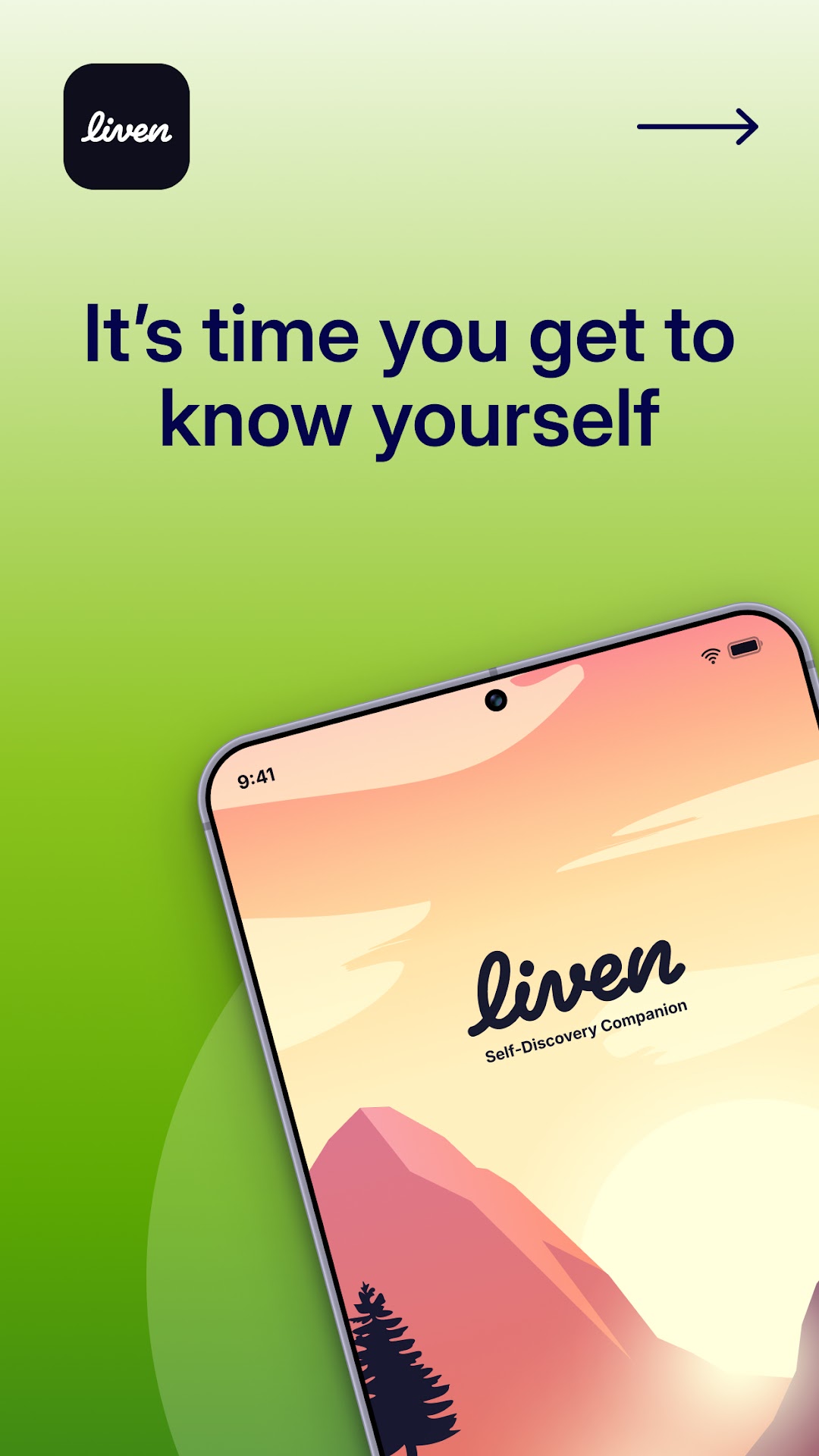
Liven is a mental wellbeing and self-discovery app built around a single idea: rather than make you assemble your own routine from a pile of separate tools, it gives you one guided plan and keeps everything in the same place. The tagline is "Discover yourself," and that captures the intent well. It is developed by Chesmint Limited; being our top pick does not change the honesty of what follows — the downsides are in here too.
The app sits in an interesting middle ground. On one side are pure meditation apps that do calm beautifully but little else; on the other is professional care, which Liven is not. Liven aims for the space in between: everyday emotional self-regulation, habit-building and reflection, organised so that a beginner is never left staring at a blank screen wondering what to do first.
Open it and you start with a quiz. Your answers turn into a personalised plan of small daily actions. Around that plan sit the parts that make Liven an all-in-one personal development app: a mood tracker with a mood calendar, a journaling space, short courses drawn from psychology, well-being tests and quizzes, a habit and routine builder with reminders, deep-focus soundscapes, and Livie, an AI companion you can talk to at any hour. There is also an optional coaching tier if you want a human in the loop.
One framing matters more here than in most app categories. Liven is a tool for self-improvement and everyday wellbeing. It does not diagnose anything, it is not a clinician, and it is not a substitute for professional care. Read that not as a disclaimer but as a description of what the app is genuinely good at: building self-awareness, steadying daily habits, and giving you somewhere structured to reflect. Hold onto that boundary as you read the rest of this review, because it shapes who Liven is right for and who should look elsewhere.
Who is Liven best for — and who isn't it for?
Liven is best for people who want one app for several goals at once instead of juggling a separate mood tracker, journaling app, meditation library and habit tracker. If you have ever downloaded three wellbeing apps in a hopeful weekend and abandoned all of them by the following one, Liven's single guided plan is built for exactly that failure mode. The breadth is the point: the tools talk to each other, so progress in one corner feeds the others.
It is also a strong fit if you prefer structure over a blank canvas. The quiz-to-plan flow means you are never deciding from scratch what to work on today, which is usually the step where good intentions stall. People who like a gentle daily nudge, a clear next action, and a sense of being guided rather than left alone tend to get the most from it. Beginners in particular benefit, because the app makes the first decision for you.
Livie widens the audience further. If you find a blank journal intimidating, talking to an AI companion is a lower-pressure way in. You do not have to know what to write; you just answer its questions, and a reflection takes shape on its own. For anyone who reflects better out loud than on a page, that alone can be the difference between using a wellbeing app and quietly dropping it.
Now the honest other side. Liven is a weaker fit if you only want one narrow thing done extremely well. If your single goal is sleep or pure meditation, a focused app such as Calm or Headspace will feel more refined and polished. If you just want to log your mood in a few taps and move on, a lightweight tracker like Daylio does that with far less around it, and for less money. And if you are looking for clinical treatment, Liven is not that and does not claim to be. It earns its place when you want breadth and guidance together, not when you want a single specialist tool.
Getting started: the quiz and your personalised plan
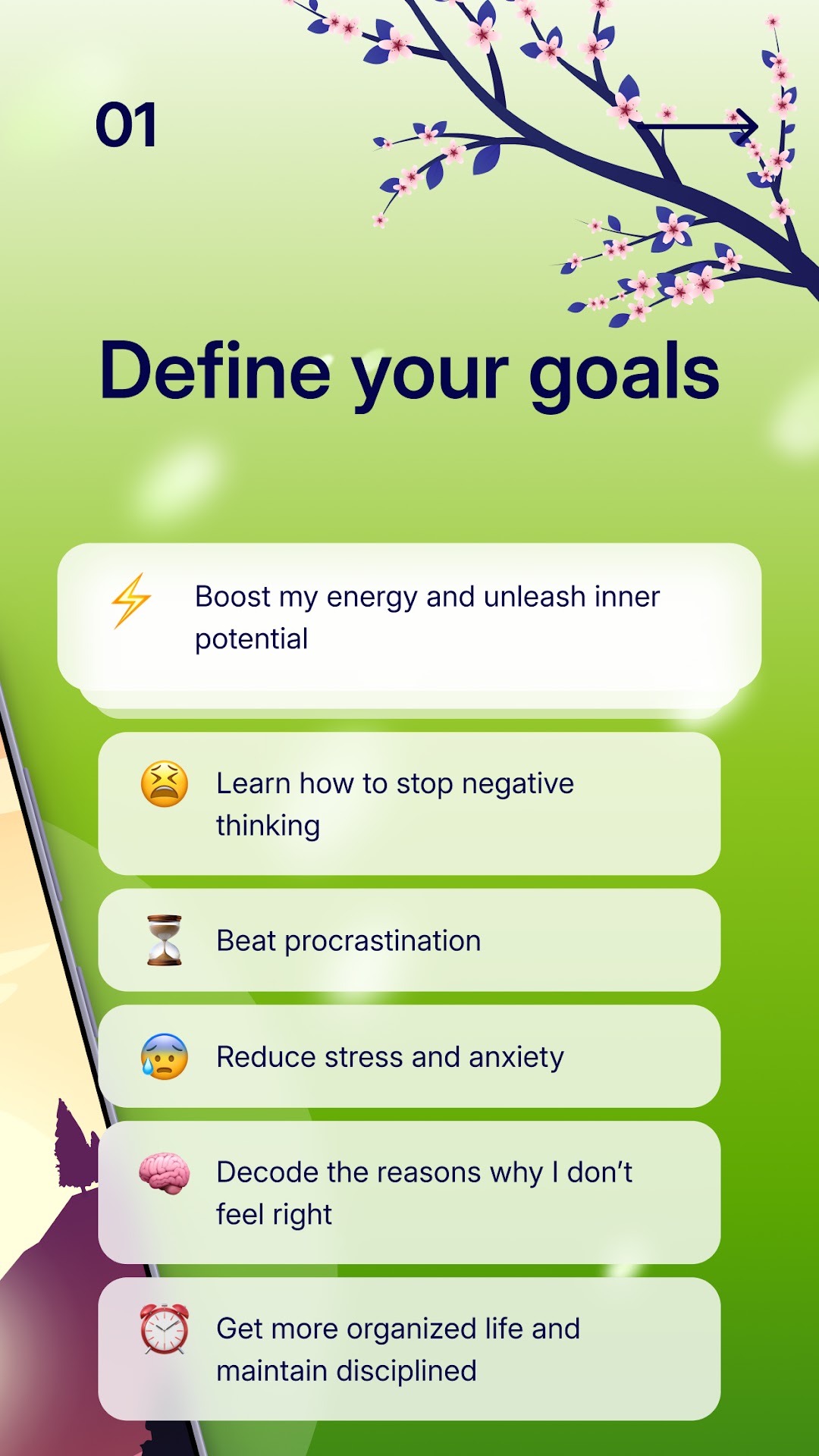
Your first run is the quiz, and it is the part Liven does better than most. It asks how you have been feeling lately, what you would like to work on, where you tend to get stuck, and how much time you can realistically give it. The questions are written in plain language rather than clinical jargon, so it feels more like a thoughtful intake conversation than a form. The whole thing takes a few minutes.
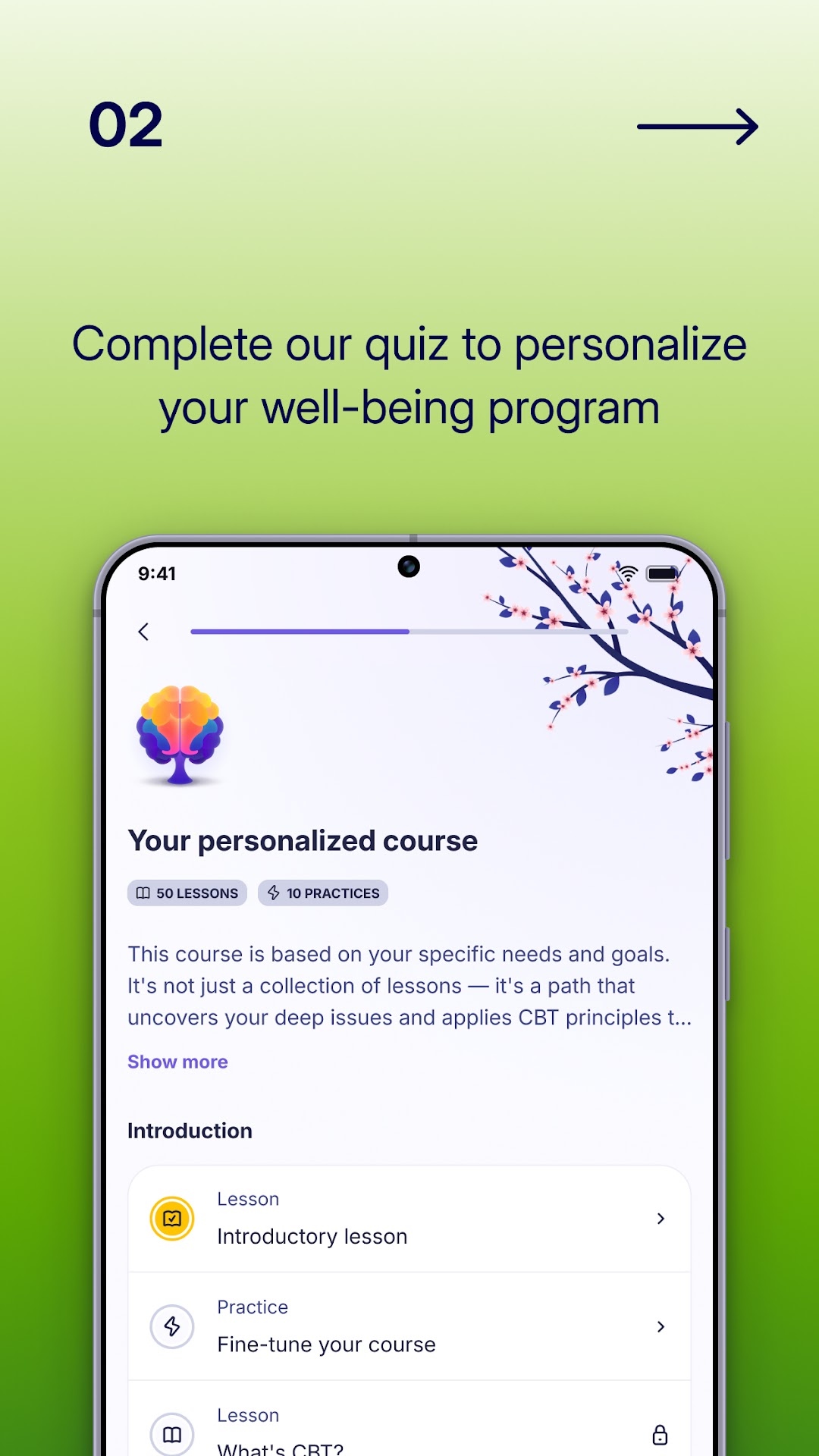
From your answers, Liven assembles a personalised plan: a sequence of small daily actions matched to the goals you chose, paced to the time you said you had. This is genuinely the hardest problem in self-improvement, and the app quietly solves it. Most people fail not because they lack willpower but because they never decide what to do first. Liven makes that first decision for you, and then keeps making the next one so momentum has somewhere to go.
The plan is not a fixed script. As you check in with your mood, finish lessons and use the other tools, the plan adapts around what you actually do and how you say you are feeling. If you tell it confidence is your focus, you see more of that; if your mood entries shift, the emphasis shifts too. It is the connective tissue that turns a set of features into something that behaves like one coherent program.
A fair caveat, because we promised honesty: a recurring theme among reviewers is that the plan does not always feel as bespoke as the quiz implies, and that some recommendations can feel general. In our use it felt clearly more tailored than a one-size library, but expectations matter. Treat the plan as a strong, sensible starting structure you then steer, rather than a perfectly custom prescription, and you will not be disappointed. It is also worth redoing parts of the quiz as your goals change, since the plan is only as current as the answers behind it.
The mood tracker and mood calendar
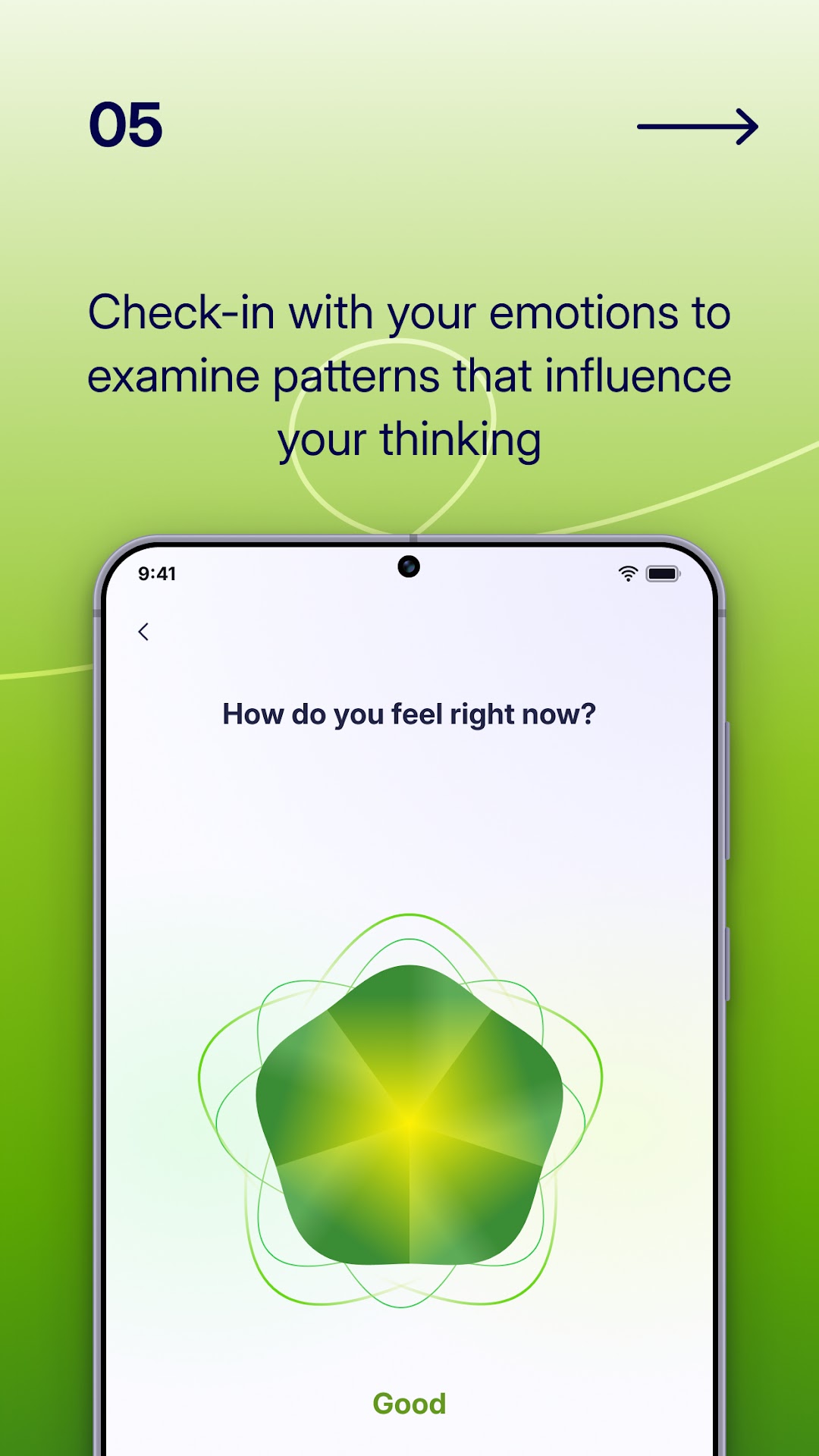
Mood tracking is one of Liven's quiet strengths, and it is the habit most likely to stick early because it costs so little effort. A check-in is fast: you pick from an emotional menu rather than a single happy-to-sad slider, which means you can name what you are actually feeling instead of flattening a complicated day into one face. Naming an emotion with a little precision is, on its own, a small act of self-regulation, and Liven leans into that.
The payoff arrives over time through the mood calendar. Instead of judging yourself on one bad afternoon, you see your weeks laid out and start noticing patterns: the Sunday dip, the better stretch after you slept properly, the rough run that lined up with a busy work period. Patterns are where insight lives. A single low mood tells you little; a shape across a month tells you something you can act on.
What lifts Liven's mood tracking above a standalone logger is that the entries do not sit in a silo. Your mood data feeds back into the plan and gives Livie context, so a string of low check-ins might surface a calming practice or a gentler reflection rather than just sitting there as a chart. The tracking is in service of doing something rather than only measuring.
It is not the very fastest tracker on the market; a dedicated app like Daylio is built to be a five-second tap and nothing more, and some people prefer that minimalism. Liven asks for a touch more and gives you a more textured record in return. If your only goal is the leanest possible mood log, that trade may not suit you. But if you want tracking that actually connects to the rest of your self-improvement work, the mood tracker and calendar here are among the better-integrated we have used, and they reward consistency rather than punishing the days you miss.
Journaling in Liven
Journaling is the tool most people know they should use and most people quietly avoid, usually because a blank page is intimidating. Liven addresses that directly with prompts. Instead of facing an empty space and no idea where to begin, you get a question to answer, and the writing tends to follow. That single design choice removes the most common reason journaling habits collapse in the first week.
The prompts are not random. They lean on the same frameworks the rest of the app draws from, nudging you toward reflection that builds self-awareness rather than just venting. You might be asked what went better than expected today, where a worry actually came from, or what you would tell a friend in your situation. These are gentle cognitive moves, and over time they train a more useful way of looking at your own thoughts.
Because journaling lives in the same app as your mood tracker, plan and Livie, your written reflections are part of one picture rather than stranded in a separate notebook app you forget exists. A journaling prompt can follow naturally from a low mood check-in, and a chat with Livie can spill into a longer written reflection when you want to slow down and think on the page.
If you are a dedicated long-form journaler who wants a powerful, flexible writing environment with rich formatting, tags and elaborate organisation, Liven's journaling is more guided than open-ended, and that may feel constraining. It is built to get the average person reflecting regularly, not to be a full writing studio. For most people that is exactly the right trade, and our guide on how to start journaling for self-improvement pairs well with the way Liven structures the habit. If you have bounced off journaling before, this is one of the gentler on-ramps we have found.
Livie: the AI companion
Livie is Liven's 24/7 AI companion, and it is one of the features that genuinely sets the app apart. It is available at any hour, which matters because the moments you most want to talk something through rarely arrive during office hours. You can open Livie at midnight after a hard conversation or first thing on an anxious morning, type what is on your mind, and get a calm, responsive exchange in return.
What makes Livie useful rather than a novelty is that it has direction. It is more than a chatbot waiting for you to entertain it. It asks questions, follows the thread of what you have told it, and tends to steer you toward a reflection, a reframing or a calming practice rather than leaving you to spiral. Used well, it is a thinking-out-loud space: somewhere to externalise a worry, hear it back in a more workable shape, and decide on a small next step.
Livie also lowers the barrier to the rest of the app. If you do not know what to journal, a short chat often surfaces the thing worth writing about. If you are not sure what you need, talking to Livie can point you at a relevant lesson or practice. It functions as a friendly front door to the whole system, which is part of why Liven feels less like a toolbox and more like a single companion.
Here is the boundary, and it is the most important sentence in this section. Livie is an AI companion, not a therapist, counsellor or crisis service. It does not diagnose, it does not treat, and it should never be the thing you rely on in an emergency. Treat it as a reflective sounding board that helps you organise your own thinking and keep going, and it is a real asset. Expect clinical judgment from it and you are asking it to be something it is not. If you want to understand the category more broadly, our explainer on AI companion apps covers what these tools do well and where their limits lie.
Bite-size courses and well-being tests
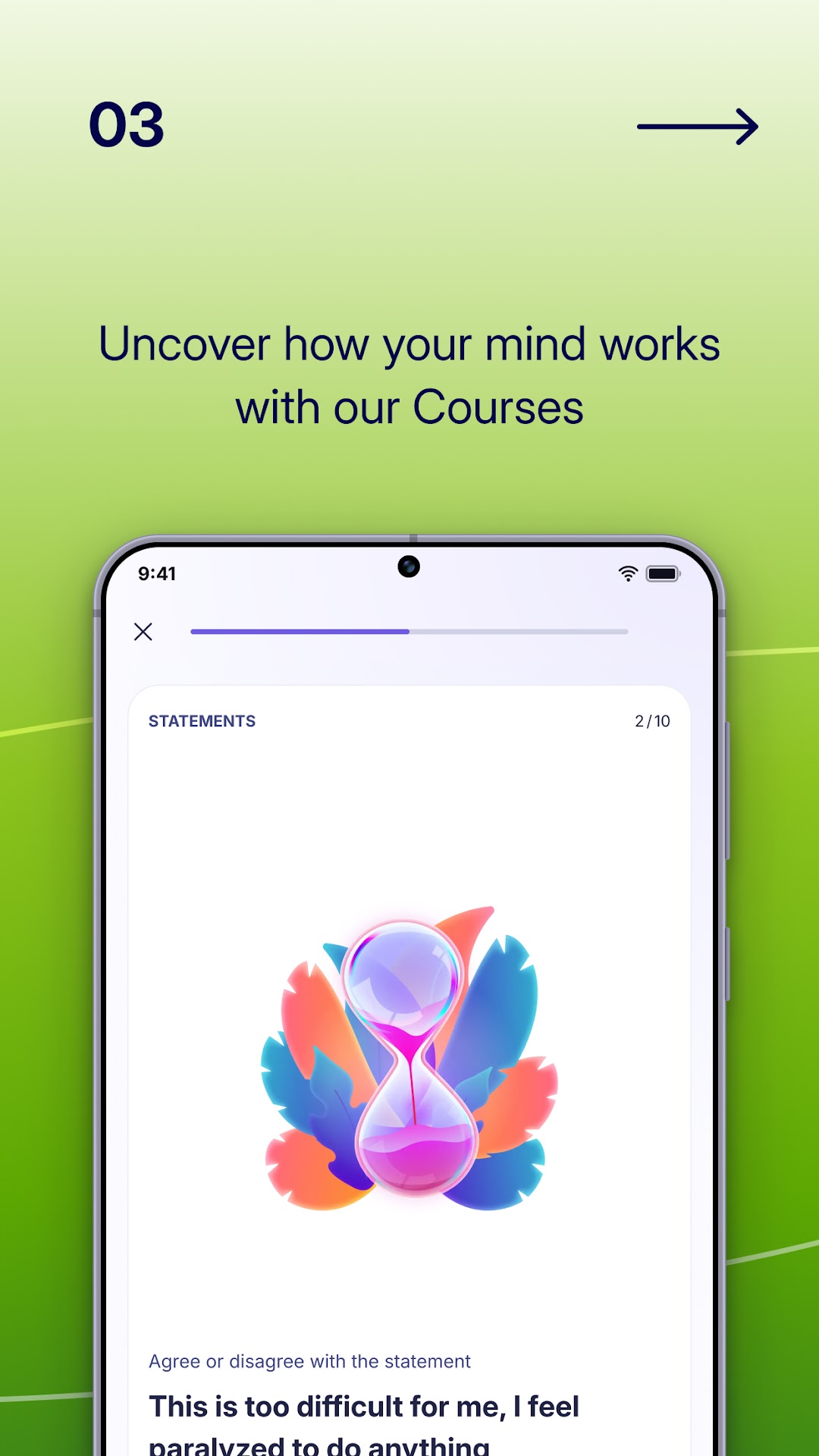
Liven's courses are short, practical and designed to be finished, which is more than can be said for a lot of self-help content. A lesson takes a few minutes, fits into a normal day, and ends with something you can actually try rather than a wall of theory. Topics span the everyday terrain of self-improvement: managing stress and overwhelm, building confidence, communicating better, understanding your own patterns, and forming habits that hold.
The tone is closer to a thoughtful friend who has read the research than a textbook. The courses translate ideas from established psychology into plain steps, and crucially they tie back into your plan, so a lesson on stress is not an isolated article but part of what the app is already steering you through. That integration is what stops the courses feeling like content for content's sake.
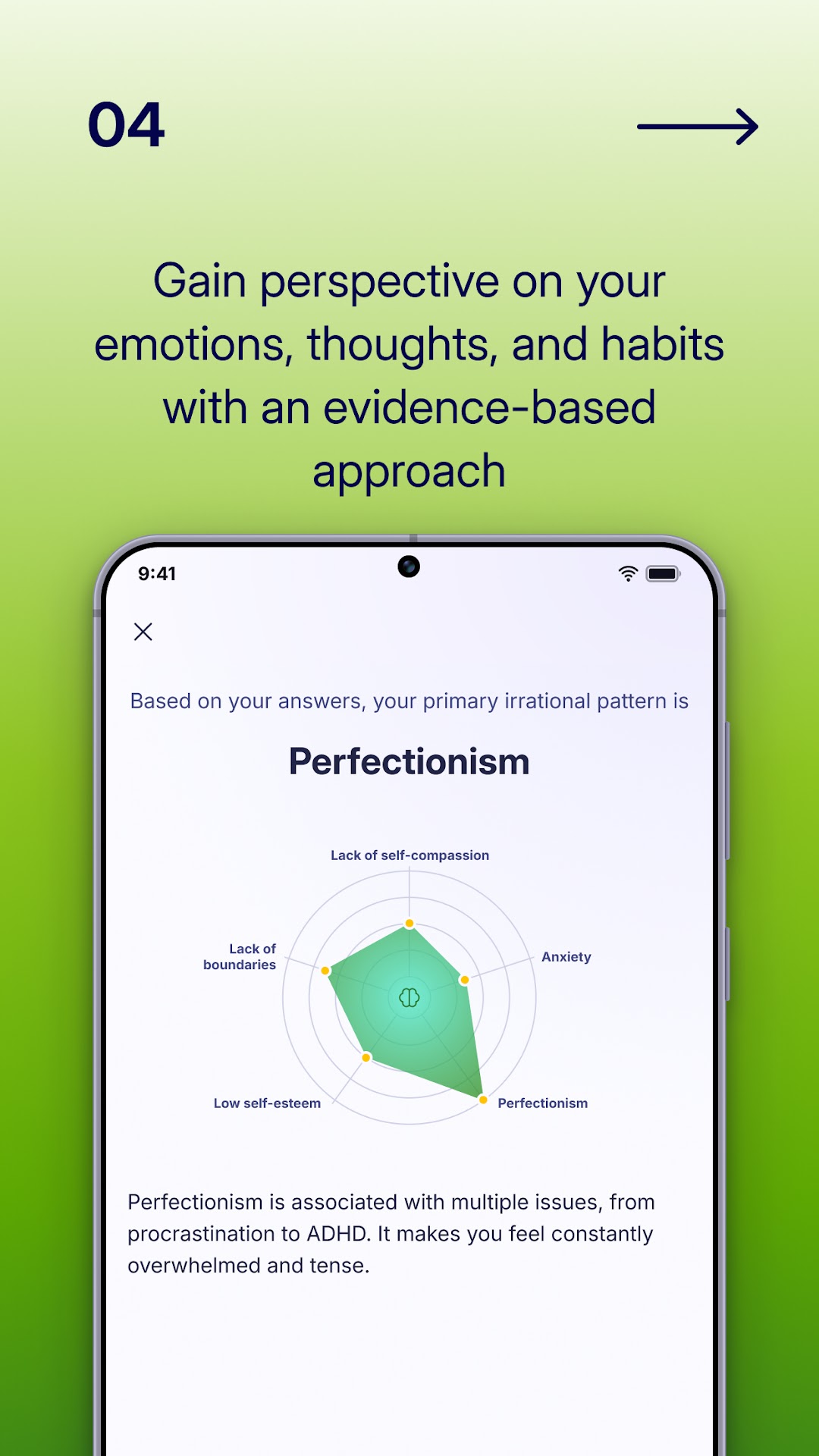
Alongside the courses sit well-being tests and quizzes. These are structured self-assessments that help you see where you are: your stress levels, your patterns, your strengths and the areas worth working on. Used as a mirror, they are genuinely useful for turning a vague "I feel off lately" into something specific enough to act on, and the results can shape what the app emphasises next.
Two honest notes. First, these are self-assessment and educational tools, not diagnostic instruments. A well-being test in Liven can help you reflect and decide where to focus; it cannot and does not diagnose a condition, and you should not read it that way. Second, depth has limits by design. The courses are deliberately bite-size, so someone seeking a deep, expert-led curriculum on a single topic will find them introductory rather than exhaustive. For the audience Liven is built for — busy people who want practical, doable psychology rather than a degree in it — the size is a feature, not a shortfall, and the breadth of topics means there is almost always something relevant to your current plan.
Habits, routines and reminders
The habit and routine builder is where Liven turns insight into something that actually changes your week. You set small daily actions, attach reminders, and the app helps you keep them in view rather than relying on memory and motivation, both of which fade fast. Because the habits are tied to the goals from your quiz, you are not building a generic checklist; you are reinforcing the specific plan the app has put in front of you.
Liven's approach favors small, sustainable actions over heroic overhauls, which matches how habits really form. A two-minute breathing practice or a single evening check-in is far more likely to survive a busy stretch than an ambitious routine you abandon by Wednesday. The reminders are there to bridge the gap between intending to do something and actually doing it, which is usually where habits live or die.
Keeping habits in the same app as your mood data, journaling and plan gives them context most standalone habit trackers lack. You can see a habit alongside how your mood has moved, which makes the connection between behaviour and feeling visible instead of theoretical. That visible link is quietly motivating: watching a steadier mood line up with a habit you have kept is more persuasive than any streak counter.
On the candid side, Liven's habit tools are part of a broader app rather than the obsessive, deeply customisable habit systems some people love. If gamified streaks, points and elaborate habit mechanics are what keep you going, a dedicated habit app such as Finch or Habitica will give you more of that specific dopamine, and our review of each covers how. Liven trades some of that depth for integration: its habits are one thread in a larger fabric rather than the whole point. For people who found pure habit apps fun for a fortnight and then empty, that integration is exactly what makes the habit stick this time. Our piece on whether habit apps actually work is worth a read if you are weighing the approaches.
Soundscapes and deep focus
Liven includes deep-focus soundscapes, and while they are not the headline reason to choose the app, they are a genuinely useful part of the whole. The sounds are there for two jobs: helping you concentrate when your attention keeps scattering, and helping you wind down when your mind will not settle. Having both inside the same app you already use for mood and reflection means there is one less reason to go hunting elsewhere.
In practice the soundscapes work best as a companion to something else rather than a destination on their own. Put one on while you do focused work, while you journal, or while you ease toward sleep, and they do their quiet job of giving your attention something steady to rest against. For racing thoughts at the end of a long day, a calming soundscape paired with a short check-in is a simple, repeatable way to downshift.
Because they sit alongside the rest of Liven, the soundscapes fit naturally into a routine. A focus session can flow straight into logging your mood; a wind-down sound can pair with an evening reflection or a Livie chat. That integration is the recurring theme of this whole review, and the audio is another small example of it: not a standalone product, but one more connected piece that makes the daily habit easier to keep.
To be straight about it, a dedicated audio app with a vast, meticulously produced library will offer more variety and polish here, and pure meditation apps such as Calm and Headspace make sound and atmosphere their entire craft. Liven's soundscapes are a solid, practical inclusion rather than a category-leading sound library. If immersive audio is the single thing you care about most, you will want a specialist. If you want capable focus and calm sounds bundled into an app that also does everything else, this does the job without you needing a second subscription.
What it's like to use Liven day to day
After the quiz, the daily reality of Liven is light and low-friction, which is the point. A typical day looks like a quick mood check-in, one short course lesson or practice from your plan, maybe a journaling prompt, and a brief exchange with Livie if something is on your mind. None of it takes long, and you are never asked to invent your own agenda; the app already knows what is next.
The thing you notice over a week or two is how connected it all feels. Your mood entries, your plan and your reflections point at the same goals rather than living in separate apps that never speak to each other. Log a low mood and the app can respond with something relevant; finish a lesson and it folds into the larger arc. Compared with cobbling together a tracker, a journal, a meditation app and a habit app, the difference in cohesion is obvious and genuinely pleasant.
Livie is the glue. Available around the clock, holding the thread of what you have told it, and nudging you toward a reflection or a calming practice rather than just making conversation, it ties the separate tools into something that feels like a single companion. On a flat day, opening Livie is often the easiest first move, and it tends to lead naturally into whatever else you needed to do.
It is not all frictionless, and we said we would be honest. The app does prompt you toward upgrades and add-ons more than feels necessary once you are in, and those nudges can interrupt the calm the rest of the experience is trying to build. It is manageable, and it fades into the background once you have settled on a plan, but it is the one part of the day-to-day that consistently grates. Going in expecting it, and being deliberate about what you tap, keeps it from souring an otherwise smooth and genuinely helpful daily routine.
The method: is Liven science-backed?
Liven's method was co-created with a board of health professionals, and it draws on recognised, well-established frameworks: cognitive behavioral therapy (CBT), acceptance and commitment therapy (ACT), dialectical behavior therapy (DBT) and positive psychology. These are not fringe ideas. They are among the most studied approaches in modern psychology, and the techniques Liven adapts from them — reframing unhelpful thoughts, clarifying values, building tolerance for difficult feelings, noticing what is going well — have a long track record of helping people in everyday life.
The right way to describe this is science-informed, and that is the language we will hold to. Liven builds on principles that research supports and involves practising professionals in shaping its content. That is a real and meaningful credential, and it is more than many wellbeing apps can honestly claim. It signals that the daily actions you are guided through are grounded in established practice rather than invented wholesale.
What it is not, and what we will not pretend it is, is "clinically proven" to treat any condition. Being informed by CBT is not the same as being a course of CBT delivered by a clinician, and being co-created with health professionals is not the same as being a medical treatment. Liven supports everyday wellbeing, self-awareness and habit-building; it does not treat, cure, prevent or diagnose anxiety, depression or anything else, and it should be read as a complement to professional care, never a replacement for it.
Held to that honest standard, the method is a real strength. The frameworks are credible, the professional involvement is genuine, and the translation from theory into small, doable daily steps is well executed. For someone who wants self-guided support built on respectable foundations rather than wellness marketing, Liven's grounding is one of the better reasons to trust it. Just keep the boundary clear in your own head: respected frameworks, applied as everyday support, is exactly what Liven is, and it is enough to make the app worth using on its own terms.
Liven pricing and value
Liven is a subscription app. The opening quiz and a limited preview are free, but the personalised program, the full course library, unlimited Livie chat and the coaching option sit behind a paid plan. It offers several options, including a weekly plan, a yearly plan with a trial, a yearly premium tier and a lifetime plan, and you will usually meet a trial offer during onboarding. We are not going to quote figures here, because prices change and vary by region; the current tiers and exactly what each unlocks are shown in the pricing section, and you should always confirm the live price in the App Store or Google Play before you subscribe.
On value, the honest read is genuinely mixed and depends entirely on how you use it. If you take advantage of the breadth — mood tracking, journaling, courses, habits, soundscapes and the companion — Liven can stand in for several separate subscriptions you would otherwise stack up, and that makes it good value for an all-in-one personal development app. The whole costs less than the sum of the specialist parts, and it costs you less mental overhead too.
The flip side is just as real. If you end up using only one corner of the app, you are paying all-in-one prices for a single feature, and a cheaper specialist would serve you better. The value case lives or dies on whether you actually use the range. The best way to find out is to use the free quiz and any trial honestly first, and watch which tools you reach for before you commit to a longer plan.
One structural gripe belongs here. The number of plan variants makes the true cost harder to read at a glance than it should be, and the trial-then-renewal pattern is where people get stung. Decide which plan you actually want before onboarding starts steering you, take a moment to compare the yearly and lifetime maths against how long you realistically expect to use it, and write down the renewal date the day you subscribe. A little deliberateness at the start is the difference between Liven feeling like fair value and feeling like a trap.
Is Liven legit? What users say
Liven is a real, established app with a large body of reviews across Trustpilot and the app stores, and its rating volume is one of the strongest in this category. That alone is worth something: this is not an obscure release with a handful of reviews, but a widely used product with a substantial track record. It rates highly on Trustpilot, solidly on the App Store, and lower on Google Play, a spread that is common for apps of this kind and worth keeping in mind when you read any single platform's score.
On the positive side, reviewers frequently praise the same things we have: the breadth of tools in one place, the feeling of being guided rather than left to organise yourself, and the AI companion as a low-pressure way to reflect. A recurring theme is people who had bounced off other wellbeing apps finding that Liven's structure finally helped a habit stick. The sense of one coherent place, rather than a scattering of half-used apps, comes up again and again.
We would not be doing our job if we hid the complaints, and there are real ones. The most common themes are an onboarding flow that pushes upgrades hard, repeated prompts inside the app, and friction around cancellation and refunds. Some users also report that the personalised plan does not always feel as tailored as the quiz suggests. These are themes across many reviews, not isolated grumbles, and they line up with our own experience of the app.
Taken together, the picture is consistent and fair: a capable, genuinely useful app with a sales-heavy front door. The product behind the marketing earns its reputation; the marketing is the part people wish were gentler. Going in with eyes open — knowing the trial terms, noting the renewal date, and being deliberate about which plan you pick — is the single best way to come away happy. If cancelling is ever on your mind, our guide on how to cancel a subscription app, which covers Liven, walks through the exact steps.
The honest downsides
Every honest review needs a section like this, and a review of our own number-one pick needs it most of all, because trust is the whole point. Liven is the most complete app we tested, and it still has real flaws you should weigh before you commit. None of them is a dealbreaker for the right person, but all of them are the kind of thing a review that only praised the app would quietly leave out.
The biggest is the upsell-heavy onboarding. From the first run, Liven works hard to move you onto a paid plan, and the prompts continue inside the app more than feels necessary. It is not deceptive so much as insistent, and for an app whose whole purpose is calm and self-reflection, the constant nudging sits awkwardly. Be deliberate: decide what you want before you start, and do not let momentum choose your plan for you.
Next is cancellation and refund friction, which is a consistent theme in user reviews. The practical defenses are simple and worth following exactly. Note your renewal date the day you subscribe. Manage the subscription through your App Store or Google Play settings rather than by deleting the app, because deleting the app does not cancel the billing. And read the trial terms so you know precisely when you would be charged. Doing those three things up front prevents almost every cancellation horror story you will read about.
The third is the most important and the least negotiable: Liven is self-guided support, not therapy. There is no live clinician on the standard plans, and the coaching tier is a paid add-on rather than clinical care. The app does not diagnose or treat any condition, and it should not be your sole support if you are genuinely struggling. Used as a complement to professional care, or as everyday self-improvement, it is excellent. Used as a substitute for treatment, it is the wrong tool, and no app in this category is the right one. A smaller, fairer gripe rounds it out: the sheer number of plan variants makes the headline price hard to read, which compounds the onboarding pressure. Know these going in and you can take the good of Liven without being surprised by the rough edges.
How Liven compares to the alternatives
The fairest way to understand Liven is against the apps people usually weigh it against, and each comparison tells you something about who Liven is for. Start with Headspace and Calm, the two best-known names in the space. Both are superb at what they do: guided meditation, sleep and a deeply polished, calming experience, with higher store ratings and a more refined feel in their core craft. If meditation or sleep is your single priority, they will out-do Liven on that one axis, and our Headspace review and Calm review go deep on each. Where Liven pulls ahead is breadth and guidance: Headspace and Calm are primarily meditation libraries, while Liven wraps mood tracking, journaling, courses, habits and an AI companion into one adaptive plan.
Daylio is the opposite kind of comparison. It is a lean, fast, much cheaper mood tracker, and for the specific job of logging your mood in a few taps and watching the patterns build, it is excellent and hard to beat on simplicity or price, as our Daylio review explains. But it is deliberately narrow. It tracks; it does not guide, teach, journal-with-prompts or talk back. If a mood log is genuinely all you want, Daylio wins on focus and value. If you want that tracking to connect to a wider plan and actually prompt action, Liven does more with the data.
Finch is the most charming alternative and the closest in spirit to Liven's gentle, all-rounder approach. It pairs self-care tasks with a cute virtual pet, and that gamified warmth keeps a lot of people coming back; our Finch review covers why it has such a devoted following. Finch is lighter and more playful, and for some that whimsy is exactly the motivation that works. Liven is more structured, more grounded in named psychological frameworks, and broader in its courses and companion. Choose Finch for delightful, low-pressure habit-keeping; choose Liven when you want that gentleness with more depth and a clearer method behind it.
The honest summary is that Liven does not win every category, and we would not claim it does. Each of these apps beats it on a specific axis: Headspace and Calm on meditation polish, Daylio on lean value, Finch on playful charm. Liven wins when you want one guided home that does most of it well rather than one specialist that does a single thing perfectly. That is precisely the trade our ranking is built around, and you can see the full picture on our best personal development apps list.
Privacy and your data
Privacy deserves real attention in this category, because the data involved is unusually personal. A mood tracker, a journal and chats with an AI companion together hold a candid record of how you feel, what you worry about and what you are working through. That is sensitive by any standard, and it is worth being thoughtful about wherever you keep it, Liven included. We would say the same about every app in this review.
The sound general practice is the same across all wellbeing apps and worth doing once, properly. Read the app's privacy policy before you pour your inner life into it, and look specifically at what is collected, whether anything is used for personalisation or analytics, and what your options are for exporting or deleting your data. Check the data-practices summary on the App Store or Google Play listing too, since those give a quick, standardized snapshot of what an app says it gathers.
There are sensible habits on your side regardless of which app you choose. Use a strong, unique password and turn on any available device-level protection so your reflections are not one unlocked phone away from anyone who picks it up. Be a little more measured about identifying details in journal entries and Livie chats than you might be in a private paper diary. And remember that an AI companion's conversations are processed by software, not whispered to a friend, so treat them as you would any other data you put into an app.
We are deliberately staying general here rather than quoting specific policy terms, because privacy policies change and the live document is always the authority. The honest, useful guidance is this: Liven is handling genuinely intimate information, so make an informed choice by reading its current policy and listing before you commit, and apply the same scrutiny you would to anything that holds your private thoughts. That is not a knock on Liven; it is basic care for data this personal, and it applies to every app in the category.
Tips to get the most out of Liven
A few deliberate moves at the start will decide whether Liven feels like a smart investment or a frustration, and most of them take only a minute. First, be intentional during onboarding. The flow will push you toward a plan; decide what you actually want before you begin, compare the options calmly, and the day you subscribe, write down your renewal date and set a reminder a few days ahead of it. That one habit defuses almost every complaint people have about the app.
Second, give the quiz your honest answers, and revisit it as life changes. The personalised plan is only as good as the input behind it, so vague or aspirational answers produce a vaguer plan. If your goals shift — a new stressor, a different focus — redoing the relevant parts of the quiz keeps the plan pointed at where you actually are rather than where you were when you signed up.
Third, let the tools work as a system instead of cherry-picking one. Liven's whole advantage is integration, so the value compounds when you actually check in with your mood, do a short lesson, use a journaling prompt and lean on Livie, rather than only using one corner. A light daily loop beats an occasional deep session; consistency, not intensity, is what makes a wellbeing app pay off. Even a few minutes a day keeps the plan adapting to you.
Finally, treat Livie and the courses for what they are and they will serve you well. Use Livie as a thinking-out-loud space and a prompt to keep going, not as professional advice, and use the well-being tests as a mirror for reflection rather than a diagnosis. And keep the boundary clear: Liven is excellent everyday support and a genuine complement to professional care, not a replacement for it. If you are ever in crisis, do not rely on an app — contact emergency services, or call or text 988 in the US and Canada. Used with that clarity, Liven gives back far more than the few minutes a day it asks for.
Verdict: why Liven is our #1
After everything, the verdict is straightforward, and it is favorable without being blind. Liven is our number-one pick and earns a 4.5/5 editorial score because it does the most in one place, guides you instead of leaving you to self-organise, and is built on recognised psychological frameworks with practising professionals involved. Our methodology rewards breadth, personalisation and method, all of it laid out on our how we rate page, and Liven is genuinely strong on each. It leads our original-data indices for all-in-one breadth and personalisation, which is not a marketing line but the measured reason it sits at the top.
We have been candid about where it does not win, and that candor is part of why we trust the recommendation. Headspace and Calm are more polished and carry higher store ratings in their core craft. Daylio is leaner and cheaper for pure mood tracking. Finch and Habitica are more playful for habit-keeping. If your need is narrow, follow our ranking to the specialist that fits, and you will get a better result than forcing Liven into a job it is not built for.
The other half of the truth is the part we will not soften: the onboarding is upsell-heavy, cancellation has drawn real complaints, the many plan variants make the price hard to read, and it is self-guided support rather than therapy, with no live clinician on the standard plans. Go in deliberately — pick your plan on purpose, note the renewal date, manage billing through the app store — and those rough edges stay manageable rather than ruining the experience.
But if what you want is a single, guided home for mood, journaling, courses, habits, soundscapes and a daily companion, Liven is the most complete personal development app we tested, and the most complete self-discovery app we have used. It turns a scattered set of good intentions into one coherent routine, and for most people that cohesion is exactly what finally makes self-improvement stick. That is why, with its flaws openly on the table, Liven is our number-one pick.
Maker: Chesmint Limited · Platforms: iOS, Android, Apple Watch · Approach: Self-guided, with an optional coaching tier · Methods: CBT, positive psychology, ACT, DBT, solution-focused
Liven plans & pricing
Free tier: A free quiz and limited preview; the program is paid.
Trial: Free-trial variants on some plans (length varies by offer).
Prices approximate, as of June 2026 — verify on the App Store / Google Play. The personalised program, full course library, unlimited Livie chat and coaching sit behind the subscription.
Cancellation: Manage and cancel through your App Store / Google Play subscriptions. Several reviews mention upsell-heavy onboarding and friction around cancellation and refunds — read the terms before you start.
Feature checklist
- Mood trackingYes
- JournalingYes
- AI companionYes
- Courses & lessonsYes
- MeditationsYes
- Soundscapes / focus musicYes
- Habit & routine builderYes
- RemindersYes
- Quiz / assessmentYes
- Community—
- Live coachingCoaching tier
- Crisis resourcesYes
- Data export—
- Apple Health / Google FitYes
- Home-screen widgetsYes
- Offline usePartial
Liven pros & cons
What's good
- Unusually broad: mood tracking, journaling, bite-size courses, soundscapes, habits and an AI companion (Livie) in one place
- Guided personalisation — a quiz builds a plan, so you're not left staring at an empty app
- Method co-developed with practising psychologists; uses recognised frameworks (CBT, ACT, positive psychology)
- Strong review volume across Trustpilot and the app stores
- Available in many languages
What to weigh up
- Onboarding leans hard on upsells, and several reviewers report cancellation/refund friction
- It's self-guided support, not therapy — there's no live clinician on the standard plans
- Pricing has many variants, which can make the true cost hard to read up front
Support
Support runs through support.theliven.com with in-app chat; the company cites fast average response times. There's no live clinician on the standard plans — coaching is a paid add-on.
Method & credibility
Liven is open about being self-guided support that complements, rather than replaces, professional care. Its program is built with practising psychologists and uses recognised frameworks. As with most consumer wellbeing apps, treat “science-informed” as exactly that — grounded in established methods, not a clinical treatment.
Privacy & data
Liven handles sensitive wellbeing data and ships the usual medical disclaimers plus a crisis resource (988 in the US/Canada). Review its privacy policy for what's collected and how it's used.
Third-party ratings
- 4.8 / 5 on Trustpilot (~24,000 reviews) — as of June 2026, verify
- 4.4 / 5 on App Store (tens of thousands of ratings) — as of June 2026, verify
- 4.1 / 5 on Google Play (1M+ downloads) — as of June 2026, verify
We report independent ratings with their source and date and never invent them. Figures here are approximate and pending verification before launch.
Our data: Liven
Two proprietary indices we score ourselves, on the same scale for every app (see all 20 on the compare page):
Liven FAQ
Is Liven worth it?
If you will actually use its breadth — mood tracking, journaling, courses, habits and the Livie AI companion — Liven is good value and our top overall pick at 4.5/5, since it can stand in for several separate subscriptions. If you only want one narrow feature, a cheaper specialist app is the smarter buy. Use the free quiz and any trial honestly first, and watch which tools you reach for before committing to a longer plan.
How much does Liven cost?
Liven is a subscription with several options, including a weekly plan, a yearly plan with a trial, a yearly premium tier and a lifetime plan, plus trial offers during onboarding. We do not quote figures here because prices change and vary by region. See the pricing section above for the current tiers, and always confirm the live price in the App Store or Google Play before you subscribe.
Is Liven therapy, or a replacement for therapy?
No. Liven is self-guided support for everyday wellbeing. Its method is informed by frameworks like CBT, ACT, DBT and positive psychology and co-created with health professionals, but it is not therapy, it does not diagnose or treat any condition, and there is no live clinician on the standard plans. Treat it as a complement to professional care, never a substitute. If you are in crisis, contact emergency services, or call or text 988 in the US and Canada.
How do I cancel Liven?
Cancel through your App Store or Google Play subscription settings, not by deleting the app, because deleting the app does not stop the billing. Note your renewal date the day you subscribe, since the onboarding is upsell-heavy and the trial-to-renewal step is where people get caught. Our guide on how to cancel a subscription app walks through the exact steps and how to request a refund.
Is there a free version of Liven?
There is a free opening quiz and a limited preview, so you can get a feel for the app before paying. The full experience — the personalised program, the complete course library, unlimited Livie chat and the coaching option — sits behind a paid subscription. There is usually a trial offer during onboarding; read the trial terms and note when it would convert to a paid plan.
What is Livie?
Livie is Liven's 24/7 AI companion. You can chat with it at any hour to think a worry through, and it asks questions, follows the thread of what you have said, and nudges you toward a reflection or a calming practice rather than just making conversation. It is a low-pressure sounding board that helps you organise your own thinking. It is not a therapist or a crisis service and does not give clinical advice.
What languages does Liven support?
Liven is available in many languages, with English, Spanish and Portuguese as priority languages, and it runs on iOS, Android and Apple Watch. Because language availability and features can change with updates, check the current App Store or Google Play listing to confirm support for your language before subscribing.