
Youper Review: 2026 Overview
The verdict
4.0/ 5 An AI emotional-health assistant that blends chat with CBT techniques and mood tracking.
Youper pairs an AI assistant with CBT techniques and mood tracking for quick, guided check-ins. It's a capable self-help tool for everyday wellbeing, not a replacement for professional care.
Youper is an AI emotional-health assistant that blends a chat-style companion with CBT and ACT techniques and built-in mood tracking. The bottom line of this Youper review: it's a thoughtful AI mental health app for quick, guided check-ins and on-demand coping skills, best used as a support for everyday wellbeing rather than as a replacement for professional care.
If you like the idea of typing out how you feel and getting a structured, technique-backed reply, Youper does that well. It's not therapy and there's no live clinician behind the chat, so it's worth knowing what the app is and isn't before you lean on it.
What is Youper?
Youper is an AI emotional-health assistant made by Youper, Inc., available on iOS and Android. It works like a conversational check-in: you tell it how you're feeling, and it responds with guided exercises drawn from cognitive behavioral therapy (CBT) and acceptance and commitment therapy (ACT). Alongside the chat, it tracks your mood over time so you can notice patterns rather than just venting and moving on.
The experience sits somewhere between a journaling tool and a coach. Instead of leaving you to free-write, the AI nudges the conversation toward recognizing thoughts, reframing them, and choosing a small next step. That structure is the point: this personal development app is trying to turn a vague bad mood into something you can actually work with.
It's best understood as a tool for everyday wellbeing, not clinical care. Youper can help you slow down, reflect, and practice coping skills in the moment, but it doesn't treat or diagnose any condition. Responsibly, the app includes crisis resources, a reminder that it sits alongside professional support rather than standing in for it.
Who is Youper best for?
Youper is best for people who want guided AI check-ins. If you find a blank journal intimidating but you'd happily answer a few prompts about your day, the chat format meets you halfway. You describe what's going on, and the assistant walks you through it step by step rather than leaving you to figure out what to write.
It's also a strong fit for anyone who wants CBT techniques on demand. When you're caught in a spiral of racing thoughts or feeling stuck, having a tool that can surface a quick reframing or grounding exercise at the moment you need it is genuinely useful. And because it tracks mood alongside the chat, it suits people who like to reflect on trends over time, not just in the moment.
Youper is a weaker match if you want depth in other areas. People who want long-form courses, a rich journaling workspace, or a broad self-improvement plan covering habits and goals will find Youper more narrowly focused. It does emotional check-ins and coping skills; it isn't trying to be an all-in-one program.
What it's like to use Youper
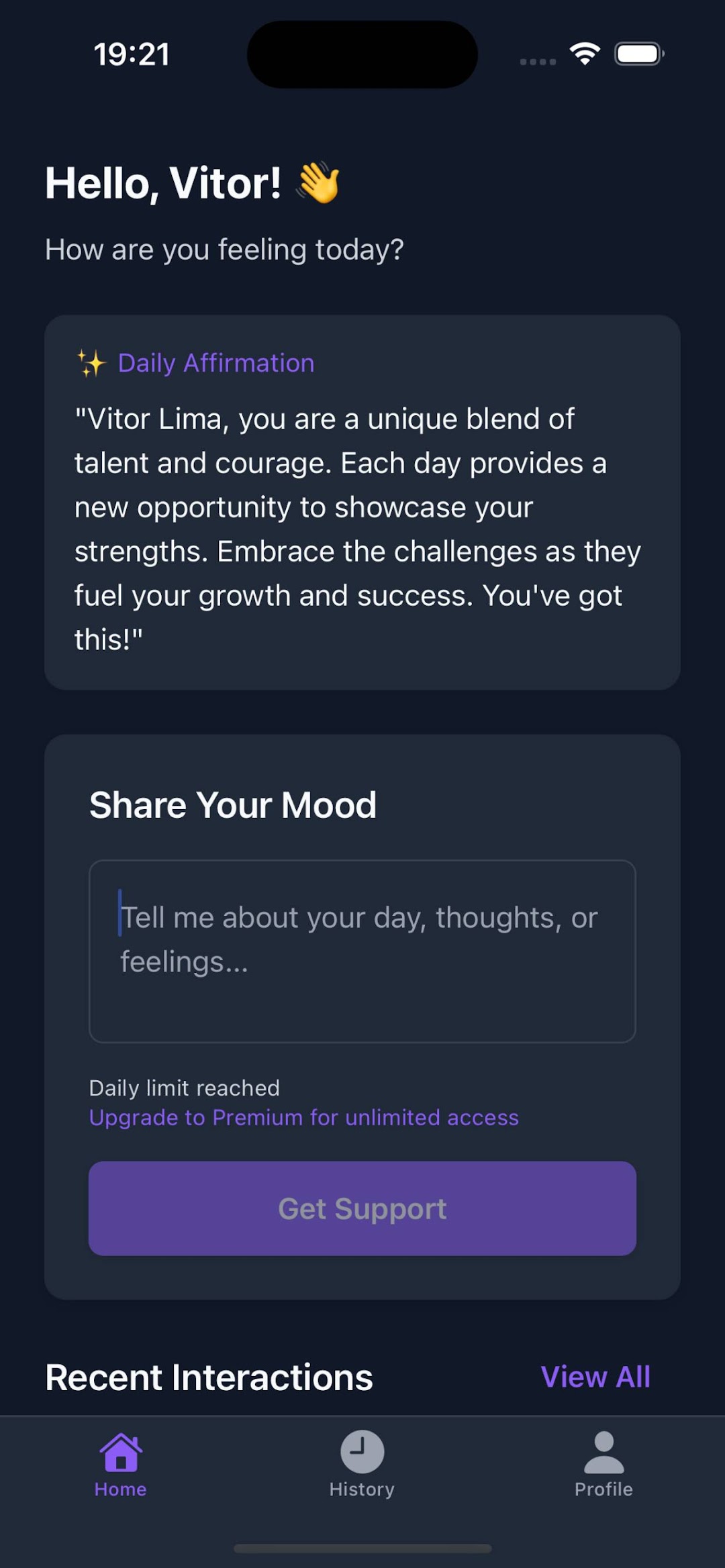
Opening Youper feels like starting a calm, low-stakes conversation. The assistant asks how you're doing, you reply in your own words or pick from quick options, and it gradually steers things toward a useful exercise. The check-ins are short by design, so you can do one in a spare few minutes rather than carving out a whole session.
The rhythm is reflective. A typical interaction has you naming a feeling, unpacking the thought behind it, and trying a small CBT or ACT technique to shift your perspective or take an action. It logs your mood as you go, so over a few weeks you build a quiet record of how you've been feeling without having to set anything up manually.
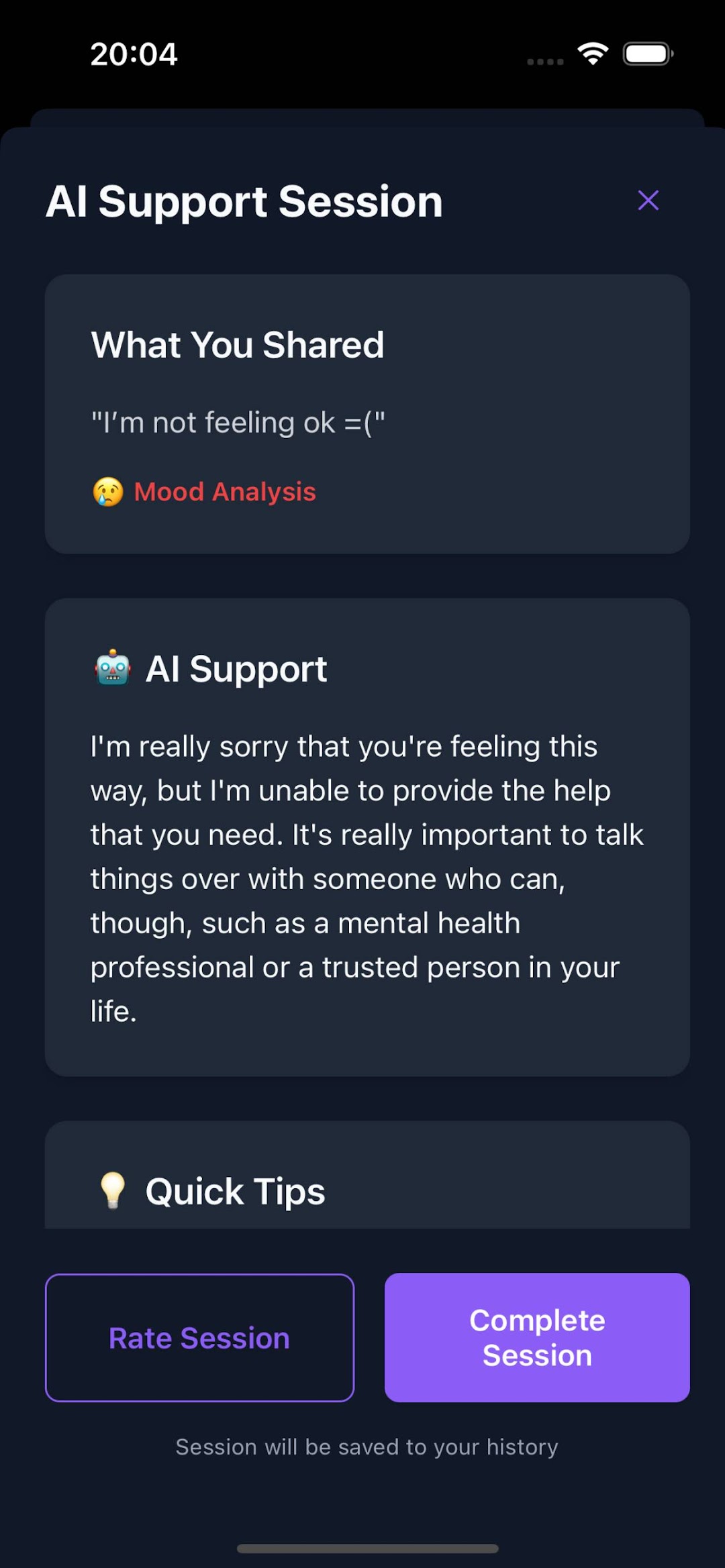
The flip side is that the AI guidance can feel formulaic. Once you've been through a few check-ins, the conversational patterns start to repeat, and the replies can read as scripted rather than truly responsive. For quick, in-the-moment support that's a fair trade, but it's the main thing that keeps Youper feeling like a helpful tool rather than a conversation with a person who knows you.
Youper's features in depth
The core of Youper is the AI assistant paired with structured techniques. Rather than offering an open-ended chatbot, it routes your conversation toward specific CBT and ACT exercises: identifying and reframing unhelpful thoughts, practicing acceptance, and choosing concrete next steps. That combination of a conversational front end with a technique-backed core is what sets it apart from a plain chat companion.
Mood tracking runs alongside the chat, so your check-ins double as a log. Over time you can look back at how your mood has moved and connect it to what was going on, which turns scattered moments of reflection into something you can actually learn from. The quick guided check-ins are the everyday workhorse here, designed to be repeatable enough to become a small daily habit.
It's just as important to be clear about the limits. There's no live clinician and no human therapist behind the conversation, so Youper can't assess, diagnose, or treat anything. It's lighter on long-form courses and broad habit-building than an all-in-one personal development app. Sensibly, it surfaces crisis resources, underlining that it's a support tool meant to complement professional care, not replace it.
Youper pricing and value
Youper follows the familiar pattern for the category: you can try the core experience, with the fuller set of features sitting behind a subscription. The value question is whether on-demand AI check-ins and CBT techniques are worth a recurring cost to you, and that depends a lot on how often you'd actually reach for them.
As a value proposition, Youper makes most sense if quick, guided emotional check-ins fit naturally into your routine and you'll use them regularly. If you only open it occasionally, the structured exercises may not feel like enough to justify an ongoing subscription. For exact prices and what each tier includes, see the pricing section on this page rather than relying on figures here.
It's worth weighing the value against what you're really getting: a focused AI emotional-health tool, not a comprehensive program. If the chat-plus-techniques approach clicks for you, it can be a worthwhile companion. If you want more breadth for your money, a broader app may stretch further.
What users say about Youper
Reviewers often praise how approachable Youper makes self-reflection. A recurring theme is that the chat format lowers the barrier to checking in, especially for people who feel overwhelmed and don't know where to start. Many appreciate getting a concrete CBT-style technique to try rather than just a sympathetic ear, and the mood tracking is frequently mentioned as a quiet, useful way to spot patterns.
Youper is generally well received on the app stores, which reflects how many people find the quick, guided check-ins genuinely helpful in the moment.
The honest criticisms are fair and predictable. A common complaint is that the AI guidance can feel formulaic or repetitive once you've used it a while, and some reviewers wish the conversation felt more personal. Others are clear-eyed that it isn't therapy and doesn't replace talking to a real person. None of these are surprising for an AI mental health app, but they're worth knowing before you commit.
Youper vs Liven: how they compare
Youper and Liven both help you understand and care for your emotional life, but they're built for different scopes. Youper is a focused AI emotional-health tool: its strength is quick, guided check-ins backed by CBT and ACT techniques, with mood tracking woven in. On that specific job, the chat-plus-technique approach is genuinely good, and if that's all you want, Youper does it cleanly.
Liven goes broader as an all-in-one personal development app. Alongside an AI companion for on-demand support, it offers mood tracking, a real journaling workspace, structured courses, and habit tools, plus a guided plan that gives your self-work a clear direction. Where Youper concentrates on the in-the-moment emotional check-in, Liven spreads across the wider work of building habits, learning, and reflecting over the long term.
So the honest comparison comes down to focus versus breadth. If you mainly want fast, technique-backed AI check-ins and a mood log, Youper is a sensible, narrowly excellent pick. If you want that emotional-support layer plus courses, journaling, and habits in one place, Liven covers far more ground. Some people happily use a focused tool like Youper for daily check-ins and reach for an all-in-one app when they want depth.
Maker: Youper, Inc. · Platforms: iOS, Android · Approach: Self-guided AI · Methods: CBT, ACT, mindfulness
Youper plans & pricing
Free tier: Limited free; subscription for full use.
Trial: Free trial offered.
Prices approximate, as of June 2026 — verify on the App Store / Google Play. Unlimited AI sessions and full content need a subscription.
Cancellation: Cancel through your app-store subscription; check the renewal date.
Feature checklist
- Mood trackingYes
- JournalingYes
- AI companionYes
- Courses & lessonsYes
- MeditationsYes
- Soundscapes / focus music—
- Habit & routine builder—
- RemindersYes
- Quiz / assessmentYes
- Community—
- Live coaching—
- Crisis resourcesYes
- Data export—
- Apple Health / Google Fit—
- Home-screen widgetsYes
- Offline usePartial
Youper pros & cons
What's good
- Combines an AI assistant with structured CBT techniques
- Quick guided check-ins
- Tracks mood alongside the chat
What to weigh up
- AI guidance can feel formulaic
- Not therapy; no live clinician
Support
Support runs through Youper's help resources.
Method & credibility
Uses CBT/ACT techniques; a support tool, not clinical care.
Privacy & data
Review Youper's privacy policy for how chat and mood data are handled.
Third-party ratings
- 4.7 / 5 on App Store — as of June 2026, verify
- 4.6 / 5 on Google Play — as of June 2026, verify
We report independent ratings with their source and date and never invent them. Figures here are approximate and pending verification before launch.
Our data: Youper
Two proprietary indices we score ourselves, on the same scale for every app (see all 20 on the compare page):
Youper FAQ
Is Youper free to use?
Youper lets you try its core experience, with the fuller set of features available through a subscription. Whether it's worth the cost depends on how often you'd use the AI check-ins and CBT techniques. See the pricing section on this page for current details.
Can Youper replace therapy?
No. Youper is an AI emotional-health assistant that supports everyday wellbeing and helps you practice coping skills, but it has no live clinician and doesn't treat or diagnose any condition. It's meant to complement, not replace, professional care, and it surfaces crisis resources when needed.
How is Youper different from a regular chatbot?
Youper pairs a conversational AI with structured CBT and ACT techniques rather than offering open-ended chat. It guides you toward specific exercises like reframing unhelpful thoughts and tracks your mood over time, so the conversation has a clear purpose beyond just talking.